

Dental Implants for Missing Teeth
A dental implant is a device placed in the jawbone to support a dental restoration such as a crown, bridge or removable prosthesis. Implant treatment is one of several options for replacing missing teeth. Other options may include a tooth-supported bridge, removable denture or no replacement, depending on the circumstances.
Suitability depends on factors including oral health, available bone, gum condition, general health, smoking history, medications, bite forces and the proposed restoration. Implant treatment involves surgery and requires ongoing oral hygiene and professional maintenance.
Dental implants are synthetic screw-like structures made of titanium or other materials well-suited to the human body that function to replace single or multiple missing teeth. They are anchored to the jawbone and act as a foundation to retain and support fixed or removable prostheses such as crowns and bridges.
The first step in the dental implant process is to develop an individualised treatment plan following an interview and meticulous treatment planning to address your specific needs and preferences, It is only through organised and systematic approach that an appropriate diagnosis can be made. Based on these diagnoses, functional and aesthetic success can be achieved predictably.
Initial investment in dental implants will cost more than a conventional bridge but studies have shown this is more economical in the long run than the latter. Furthermore, in the construction of a conventional bridge, the quality of the adjacent tooth will inevitably be compromised which may incur extra costs. As with any other dental restorations, diligent oral hygiene, proper care and regular dental visits will aid in the longevity of your dental implant.
Why is it important to replace missing teeth?
Depending on the clinical situation, an implant-supported restoration may help replace missing teeth without using neighbouring teeth as bridge supports. It may also provide support for certain fixed or removable prostheses. Outcomes and maintenance requirements vary.
What are the Reasons for tooth loss?
- Caries, Gum Disease or Failure of formerly treated tooth
- Accidents in daily activities or contact sports
- Naturally (congenitally) missing tooth or teeth
Options to Replace
- Dentures (Partial or full)
- Fixed Bridges
- Implant supported crowns or bridges. (Medisave claimable)
Depending on how many teeth are missing and the condition of the jawbone, implant treatment may range from single implants to a full-arch All-on-4 approach, and in some situations implant-retained dentures may be considered instead.
Risks involved in Dental Implants
⦁ Pain, swelling and bruising.
⦁ Bleeding and infection.
⦁ Failure of integration.
⦁ Gum or bone loss around the implant.
⦁ Damage to adjacent structures.
⦁ Nerve disturbance in relevant sites.
⦁ Sinus-related complications in upper posterior sites.
⦁ Prosthetic loosening, wear, fracture or replacement.
⦁ Need for additional bone or soft-tissue procedures.
⦁ Need for ongoing review and maintenance.
⦁ Implant loss and further treatment.
What is the process of dental implant treatment?
- Pre-treatment evaluation and Treatment Planning E&D
- X-ray ( OPG or CT for more complex cases) and U/L Study models
- Sedation? LA or GA
- Augmentation ? Eg. Bone Graft? Sinus Lift
OPG – Orthopantogram is a “2D” panoramic scanning dental x-ray of upper and lower jaw
CT – Computed Tomography is a more detailed “3D” cross sectioned images of upper and lower jaw
- Implant Placement 2 weeks later
- Duration of surgery is 45 to 60 min per implant, normally under local anaesthesia in the dental office
- 1 stage or 2 stage (additional surgery to expose buried implant), depending on the complexity of surgery and bone.
- Crown Placement 4 to 6 months later
- After a healing period of 4 to 6 months, the jawbone will form a strong bond with the implant, achieving solid foundation.
- Crown impression, then restoration of the definitive crown can proceed.
- Implant protection and maintenance every 6 months.
Suitability for dental implants.
- Medical Health.eg. Diabetes, reduced body resistance
- Dental Health. eg. Periodontal health, Bruxism
- Social Health.eg. Smoking
- Availability of Bone, Augmentation required?
How long to wait after extraction before placement of dental implants?
Depends on the difficulties of the extraction, infection, bone quality and quantity.
- Immediate
- 1-3 months
- 4-6 months
How long to wait after implant placement until I get my teeth?
Your implant needs time to heal before loading. Restoration usually begins after 3 months for a simple implant surgery without bone grafting. For complex cases that involve bone grafting or sinus lift, it may take 9 to 12 months before restoration begins.
Is Dental Implant Painful?
No. An effective local anaesthesia is used during the surgery so that you do not have any discomfort during the placement of the dental implant. The mild discomfort you might experience after surgery can be managed by medications.
For patients who are anxious, an arrangement can be made for general anaesthesia/sedation. This will help the patient sleep comfortably throughout the procedure.
Pre-Surgery Precaution?
Pre-medication with antibiotics and mouthwash.
Stop Smoking 2 weeks prior to the surgery.
Post-surgery Care
- Oral Hygiene Instructions
- Cold compress or Ice pack to reduce pain and swelling
- Soft diet
- Resume normal activity
- Simple 1-2 implant -> 1 to 2 days
- Complex with augmentation -> 5 to 7 days. ( because of swelling)
Crown Placement
2 weeks to 1 month
- Impression
- Trial Fit
- Fit
- Cement Retained
- Screw Retained
- Review
How soon can I eat and function after my implant gets fitted?
Immediately. It is strongly advised to adopt a soft diet.
How do I care for my implant(s)?
Success of your dental implant(s) will depend on how well you maintain them.
- Clean twice a day using a small soft-bristled toothbrush
- Floss once daily to remove any plaque
- Clean after each meal.
- Mouthwash
- Interdental brushes
- Visit your Dentist every 3 to 4 months for a check-up
- X-ray to assess bone health and implant stability.
Complications
- Implant loose
- failure to fuse with bone
- Artificial teeth
- Chipped tooth/ porcelain
- Loosening of screws
- Gum inflammation
- Implant Fracture – rare
Cost of Dental Implants in Singapore
The cost of a dental implant depends on several factors: whether you need a single tooth implant or multiple, the implant material used, whether bone grafting is required, and the type of crown fitted on top.
The following invented figures illustrate how to read an itemised estimate. They do not describe an actual patient, a clinic offer or typical Singapore market fees. For this illustration, all amounts shown are assumed to include GST.
| Illustrative item | Hypothetical fee including GST |
|---|---|
| Implant placement with abutment and crown | S$3,270.00 |
| Clinically indicated imaging | S$272.50 |
| Total before any eligible MediSave withdrawal | S$3,542.50 |
For a detailed look at what a dental implant quote should include — and how MediSave may apply — see our dental implant cost in Singapore guide.
Initial cost for the implant is higher but will be equivalent to that of conventional bridges within a few years. (Dental Practice Report 2004) Note biological costs incurred from cutting or damaging healthy neighbouring teeth!
Exact pricing depends on your individual case and will be confirmed after a consultation and assessment with our dentist.
While the upfront cost of an implant is higher than other tooth-replacement options, it’s often comparable to conventional bridges once you account for their typical lifespan and implants are Medisave claimable for the surgical component.
A Dental Clinic is a MediSave-accredited and CHAS dental clinic in Singapore and eligible patients may use MediSave or the Community Health Assist Scheme (CHAS) toward the cost of qualifying procedures. See our financial policy for details.
Using Medisave for Your Dental Implant
The surgical component of implant-supported crowns or bridges is Medisave claimable. How much you can claim depends on the specific procedure, your available Medisave balance, and current CPF regulations — Medisave may not cover the full cost of treatment, so we recommend confirming your eligible claim amount with us and with CPF before starting treatment.
For full details on how Medisave works for dental surgery at our clinics, see our Medisave Accreditation page.
Dental Implants at Our Jurong East Clinic
Looking for a dental implant clinic near you in Jurong East? A Dental Clinic in Jurong East Central, located along Jurong Gateway Road, is accessible by MRT and bus and serves patients across Jurong East, Jurong West, and the surrounding western Singapore neighbourhoods. Our Clementi clinic is also available for patients on the west side of Singapore. See our addresses, hours, and contact details, or book a consultation to discuss your implant options.
Patient Information: Dental Implant Surgery Congratulations! You have successfully undergone Dental Implant Surgery.
1. Continue biting with firm pressure on the gauze for another 1 to 2 hours. Change the gauze when it becomes soaked with blood. There may be a slight oozing of blood even on the following day; Do not worry.
2. Do not rinse your mouth or consume hot food and beverages for 3 to 4 hours after the operation.
3. Following the use of local anesthesia, the lips, tongue, or cheeks may remain numb for 3 to 4 hours. While the numbness is wearing off, they may be damaged by biting which can cause swelling, bleeding, or ulceration. Parents of young patients are advised to remind their children from harming themselves in this way.
4. You may notice slight swelling or bruises on your face where the surgery was performed. You may use a cold compress or an ice pack to reduce the swelling. The swelling should resolve in a few days.
5. If you are a smoker, please refrain from smoking for at least 4 to 5 five days after the operation.
6. Take a good rest after the operation. Do not engage in strenuous physical activities (e.g. aerobics, jogging, and swimming) for at least 4 to 5 days after the operation.
7. You are advised to consume soft food for the next 2-3 days. Rinse your mouth with antiseptic mouthwash or warm salt water after each meal.
8. If bleeding re-commences:
a. Rinse mouth with cold water once, then fold a piece of gauze (or a cotton handkerchief) into a tight pad and place directly over the bleeding point. Apply firm steady pressure on the pad by biting on it for 30 minutes.
b. If bleeding persists, repeat this step twice. If this fails, please return to the clinic for professional assistance.
9. Take the medications as prescribed. If you experience any side effects, stop taking the medications and contact us immediately.
10. Brush your teeth as per normal. Take care not to brush too hard near the wound area. Use prescribed antiseptic mouthwash to gargle after brushing.
11. When washing your face, take care not to wash too hard near the wound area.
12. In the event of an emergency (e.g. non-stop & excessive bleeding, high fever), please call us immediately. If we cannot be reached, please seek emergency treatment at the Accident & Emergency Department at any hospital as soon as possible.
13. Please remember to return to us in about 2 week’s time to get the sutures removed.
After Implant Dental Treatment
BEFORE SURGERY
A Few Weeks Before:
- Arrange for a driver to take you to the clinic and pick you up on the day of the procedure. You should not travel home on your own
- Sometimes it’s better to have a helping hand. You may want to have someone care for you while you recover
- Collect any prescription medications and ensure that you have cold compresses at home to apply to your face after the surgery.
The Day Before:
- Stock up your refrigerator with soft cool foods, such as yoghurt, cold soup, ice cream, or smoothies. Your doctor may recommend you to adopt a soft food diet for a few days to allow your implants to heal.
- Drink plenty of liquids and avoid smoking, alcohol and coffee for at least 24 hours before surgery at all costs.
AFTER SURGERY
You have returned back home after the surgery. Spoil yourself, relax and rest.
When You Arrive Home
- Cool the external treatment area as soon as possible to ease potential swelling and pain.
- After surgery, sitting is better than lying down. Try to keep your head raised as much as possible. Consider using several pillows while sleeping.
- Follow your doctor’s advice and take your medications as directed to optimize healing.
- Avoid chewing hard or hot foods. Enjoy soft cool foods such as smoothies, cold soups, ice cream and yoghurt. Avoid using straws and be extra careful and gentle.
The First Few Days
- Avoid hot drinks, hot meals, and saunas. Heat may increase inflammation.
- Avoid chewing solid foods. Stick to a soft diet to allow your implant to heal.
- Stay away from alcohol, nicotine, coffee and black tea.
- Remember to get some rest. Postpone sports of any activities that require physical exertion.
- Do not use a toothbrush until your stitches have been removed. Follow your doctor’s home hygiene recommendations.
- Some patients may experience some swelling or bruising, which usually peaks on the second, or third day after the surgery. This is quite normal and will subside within a few days.
What is this title “Grad Dip Dental Implantology (Singapore)”?
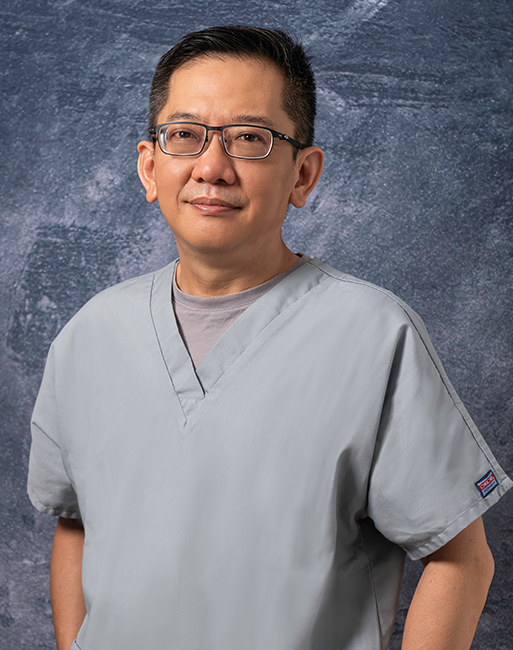
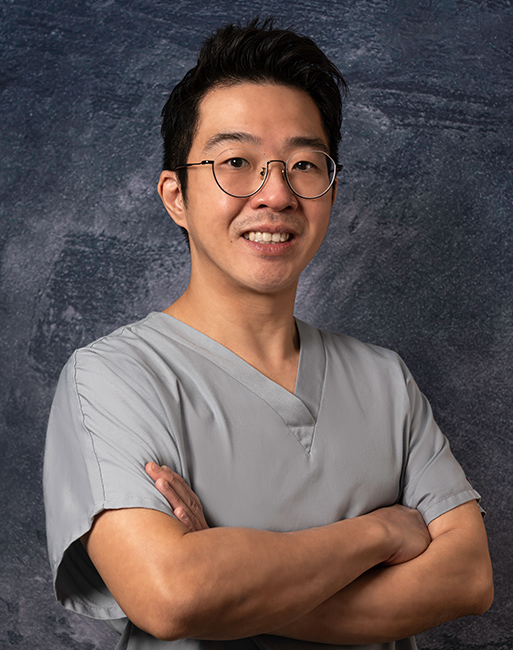
The Graduate Diploma in Dental Implantology, offered by NUS, Singapore is aimed at providing a sound scientific grounding and clinical training in implant dentistry. This two-year post graduate course is designed mainly for general dental practitioners who are interested in the field of dental implantology. The Graduate Diploma is accredited by the Singapore Dental Council. We have team of dental surgeons accredited with this post graduate title.
-
Dr. Ng Seow Choon
B.D.S (Singapore)
Grad. Dip. Dental Implantology (Singapore)Dr. Ng Seow Choon BDS (National University of Singapore)Graduate Diploma in Dental Implantology...
view profile -
Dr. Keith Ong
BDS (UK)
Grad. Dip. Dental Implantology (Singapore)Dr. Keith Ong BDS (UK) Grad. Dip. Dental Implantology (Singapore) Dr Keith Ong has a Bachelor of...
view profile -

Dr. Ooi Shan Chin
BDS (Singapore)
Grad. Dip. Dental Implantology (Singapore)Dr. Ooi Shan Chin BDS (Singapore) Grad. Dip. Dental Implantology (Singapore) Dr. Ooi Shan Chin graduated...
view profile
For appointment enquiries or information about our dental services, contact our Jurong East or Clementi clinic.